

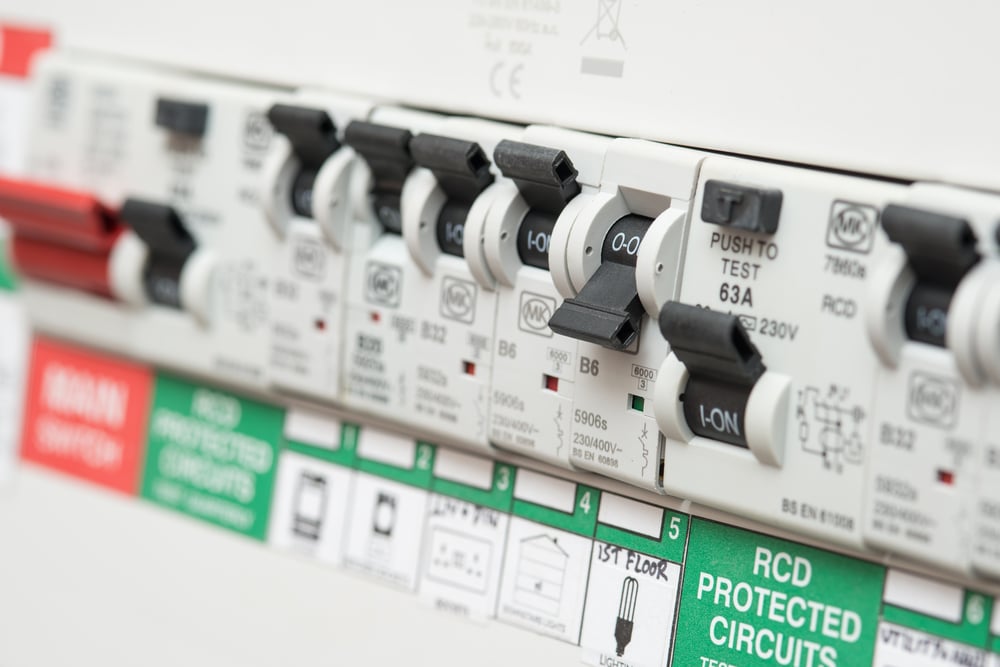
Electrical faults are among the leading causes of house fires in Australia¹, and a repeatedly tripping RCD is often an early indication that something needs attention. While some causes are simple and easy to identify, others can point to a more serious electrical fault. That’s why it’s important to understand what might be causing the issue before repeatedly resetting the switch. This blog post will help you understand what causes an RCD to trip, what you can safely check yourself, when it’s time to contact your rental provider or property manager and more.
What is a Safety Switch?
Also known as a residual current device (RCD), a safety switch is a device that automatically disconnects a circuit when it detects current leakage or an imbalance that could create an electric shock risk. This rapid response helps prevent electric shock and reduce the risk of electrical fires. That’s why rental properties in Victoria must have modern switchboards with circuit breakers and electrical safety switches. When it comes to circuit breakers, they look similar to RCDs but work differently. A circuit breaker trips during overloads or short circuits when the current exceeds its rating. Although both play an important role, an RCD is designed specifically to protect people from electric shock.
What Causes an RCD Switch to Trip Repeatedly?
While the trigger can vary from home to home, repeated RCD tripping in rental properties often comes down to a few common issues, such as faulty appliances and moisture. Let’s take a look at the most likely causes:
-
1. Faulty Appliances
This is one of the most common causes of RCD tripping in rental homes. Everyday appliances such as kettles, heaters, washing machines, and toasters may develop internal faults over time. When that happens, a small amount of current leaks outside the normal circuit path and the RCD responds. This is particularly evident in older appliances that have been heavily used.
-
2. High Appliance Overload
Running too many high-draw appliances on a single circuit or power board can exceed the circuit's capacity. While circuit breakers are the primary protection against overloads, excessive loads can also contribute to RCD tripping in some cases. This is more commonly seen in older rental properties with fewer circuits and limited outlets per room.
-
3. Moisture
When moisture finds its way into an outlet or cable connection, it creates a conductive path that the RCD will detect and respond to. Bathrooms, kitchens, laundries, and outdoor power points are the highest-risk areas, especially after rain or during humid conditions.
-
4. Earth Leakage
Often caused by damaged cables or moisture, earth leakage occurs when current strays outside its intended path and flows to earth. The RCD is specifically designed to detect earth leakage, which is why even small faults can cause it to trip. However, rather than being a standalone cause, earth leakage is usually the underlying reason an RCD trips. In some cases, low-level leakage can accumulate across multiple circuits. Although each source may be too small to trip the RCD individually, their combined leakage can exceed its threshold.
-
5. Damaged or Faulty Wiring
Wiring that has aged or been physically damaged can develop insulation faults, causing current to leak, and this can trigger the RCD repeatedly. Older rental properties are at higher risk, particularly where the electrical installation hasn't been updated or inspected in years. Rodent damage is another factor worth noting, as rats and mice can chew through cable insulation inside walls and roof spaces, creating faults that are invisible from the outside.
-
6. Faulty RCD
RCDs degrade with age and can develop internal faults that make them unreliable or overly sensitive. This may cause random tripping or issues when resetting the switch. This is frequently seen in older rental properties where the switchboard hasn't been updated in years.
-
7. Incorrect RCD Rating/Sensitivity
Even when the RCD itself is fine, if it isn't correctly matched to the circuit it protects, it can cause nuisance tripping. This can occur when the installation has not been completed correctly, or cumulative leakage from connected equipment is causing nuisance tripping. It can also occur in properties where non-standard equipment has been installed on circuits originally designed for standard household loads.
RCD Keeps Tripping?
We can help you understand what’s causing it and ensure it’s properly checked and resolved before it becomes a bigger issue.
What Tenants Should Do When the RCD Safety Switch Keeps Tripping
It's natural to want the power restored as quickly as possible when an RCD keeps tripping. However, repeated resetting can sometimes mask a more serious fault. Let's take a look at what you, as a tenant, can safely do and can't, as well as when to escalate the issue.
-
Step 1: Unplug Appliances
Turn off or unplug all appliances connected to the affected circuit.
-
Step 2: Reset the RCD
Reset the RCD by switching it back to the ON position.
-
Step 3: Reconnect Appliances
Plug appliances back in one at a time and switch them on individually. If the RCD trips when a particular appliance is reconnected, that appliance is likely the cause and should not be used.
-
Step 4: Check for Visible Damage
Inspect for visible damage without touching exposed wiring or attempting any repairs.
-
Step 5: Escalate if Required
If the circuit won't reset or trips immediately after resetting, leave it switched off and avoid repeatedly trying to reset it. Contact your property manager or landlord so a licensed electrician can inspect the fault.
It is important to keep a record of when the RCD trips intermittently and what appliances were in use at the time, including the time of day. This information can help identify the cause of the fault and assist the electrician in diagnosing it.
-
When NOT to Keep Resetting Repeatedly
- The RCD trips immediately every time it’s reset.
- Burning smells or sparks are present.
- Water has entered the outlets or electrical equipment.
- There’s visible damage to cords, plugs, or power points.
- The cause of the tripping cannot be identified.
-
When to Notify Your Rental Provider or Property Manager
- The RCD continues to trip even after you have completed the basic checks.
- A fixed appliance, such as an oven or an air conditioner, appears to be causing the issue.
- Power cannot be safely restored to the affected circuit.
- Faulty or damaged wiring is suspected.
- The issue is affecting essential services or multiple circuits.
- ⚠️ SAFETY FIRST
If the RCD won’t reset or you’re unsure about anything you have found, always contact a licensed electrician. Do not attempt to inspect or repair any fixed wiring or hard-wired appliances yourself.
Red Flags That Require Urgent Attention from a Licensed Electrician
In some circumstances, basic troubleshooting will not be sufficient to resolve the issue. Here’s when you need to arrange for a licensed electrician to attend as soon as possible:
-
Warning Signs
- Burning smell or scorch marks near power points or the switchboard.
- Smoke from any outlet or electrical equipment.
- Crackling or buzzing sounds coming from the switchboard or power points.
- Visible damage to wiring or outlets, including discolouration or melted plastic.
- Tingling sensation when touching an appliance or power point.
- Water exposure to any part of the electrical system after a leak.
- Repeated power fluctuations affecting multiple rooms.
- The RCD won't stay reset.
What Victorian Rental Laws Say About RCD Safety
Victorian rental providers have a legal obligation to keep the electrical installation safe. Under Victorian rental laws, rental providers covered by the current requirements must have electrical installations and fittings checked by a licensed electrician at least once every 2 years.
Why RCDs are a key part of electrical safety checks
As one of the most important electrical safety devices in a home, RCDs help reduce the risk of electric shock and serious injury. A professional electrical safety check includes testing RCDs to verify they are correctly installed and operating at the required sensitivity.
-
What Rental Providers Are Responsible For
Rental providers are responsible for ensuring the property's electrical system remains safe and compliant with Victorian rental laws. They need to:
- Facilitate electrical safety checks.
- Act promptly on reported faults.
- Arrange for licensed electricians to conduct any repairs.
- Keep records and provide them to tenants on request.
Tenants aren't responsible for electrical repairs. Therefore, any faults involving the property's electrical system must be addressed by the rental provider or property manager. In addition, a licensed electrician must be called in to perform the necessary repairs. If they fail to address any issues, tenants may be able to seek help through RDRV (Rental Dispute Resolution Victoria) or, where applicable, VCAT (Victorian Civil and Administrative Tribunal).
Reliable Residual Current Device Tripping Solutions for Safer Homes with Rental Safety Inspections
With RCDs playing a key role in saving lives by preventing electrocution and electrical fires, the last thing you want is a safety switch that’s tripping without explanation. The safest approach is always to have it properly checked so the issue can be resolved, rather than repeatedly resetting or ignoring it. That’s where our expert team at Rental Safety Inspections can step in to provide a thorough inspection, ensuring your rental property remains safe and compliant.
Frequently Asked Questions on RCD Safety Switch Tripping
Why does my RCD safety switch keep tripping even when nothing is plugged in?
If your RCD is tripping even when nothing is plugged in, the problem is most likely the fixed wiring or the RCD itself. Therefore, this isn’t something you should diagnose or repair yourself. If unplugging everything doesn’t stop it from tripping, we recommend contacting your rental provider or property manager and having a licensed electrician take a look.
How do I tell if the RCD is tripping due to a wiring fault or an appliance issue?
A simple way to narrow it down is to unplug everything and reset the RCD. If it holds, plug your appliances back in one at a time. If it trips when you reconnect a specific item, that appliance might be causing the issue. If the RCD trips immediately with nothing plugged in, the issue may be with the fixed wiring, the RCD itself, outdoor fittings or a hard-wired appliance.
Can rain cause the RCD switch to trip?
Yes, it can. Any outdoor power points or wiring that aren’t adequately sealed can allow moisture in during heavy rain or high humidity, triggering the RCD. If tripping tends to occur after it rains, that’s a strong sign that moisture is getting in somewhere it shouldn’t. In this situation, avoid using the affected outlets and report them to your rental provider or property manager so they can be properly inspected and sealed.
How do I reduce nuisance RCD tripping while keeping the property safe?
Start by identifying whether a specific appliance is causing it. Since older appliances are a common trigger, simply replacing them could stop the tripping. It is also important to avoid overloading a single circuit and check that any power boards you are using are in good condition. If tripping continues without a clear cause, the RCD may be incorrectly rated for the circuit or be due for replacement. If the problem keeps happening, it’s best to have it inspected so the fault can be found and fixed properly.