Info Sheet: Flue Terminal Locations & Clearances
1. What is a Flue Terminal? #
A flue terminal is the external outlet pipe of a gas appliance (such as a gas space heater, ducted heating unit, or gas hot water system) that safely vents combustion exhaust gases—including carbon monoxide—out of the building into the open air.
2. Regulatory Standards (AS/NZS 5601.1) #
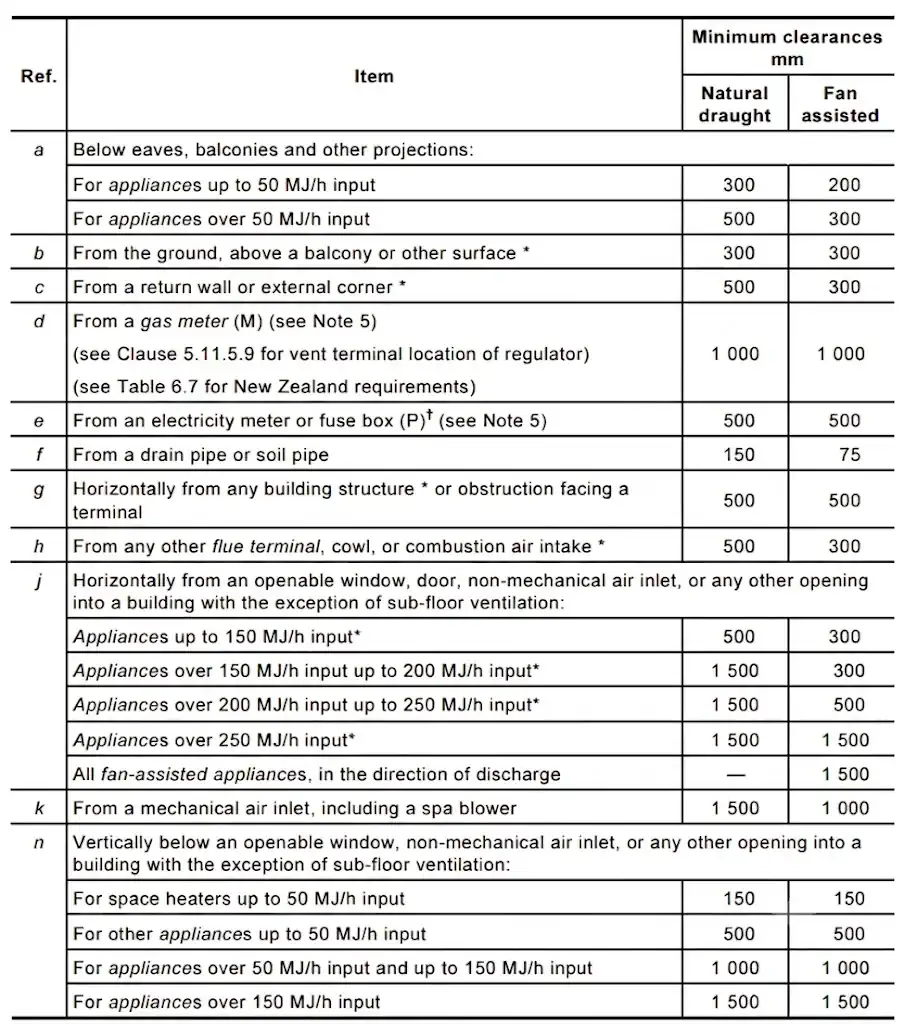
The installation, location, and clearance distance of all flue terminals are strictly regulated under Australian Standard AS/NZS 5601.1 (Gas Installations).
To meet Victorian mandatory rental compliance and pass a gas safety check, flue terminals must strictly maintain prescribed minimum separation distances from:
- Openable doors and windows
- Air intakes, vents, and evaporative cooling units
- External corners, roof lines, and eaves
- Ground levels, balconies, and pathways
- Property boundaries and neighboring structures
3. Why Proper Flue Terminal Location Matters #
During a mandatory gas safety check, our VBA-licensed gasfitters at Rental Safety Inspections (RSI) verify that all flue terminals meet required statutory clearances.
Incorrect or obstructed flue terminal locations pose significant safety and compliance risks:
- 🚨 Toxic Gas Re-entry: Exhaust gases (such as Carbon Monoxide) can be drawn back into living spaces through nearby open windows, doors, or fresh-air vents.
- 🔥 Fire Hazards: Flue terminals installed too close to combustible building materials, timber framing, or dense foliage create a high risk of heat ignition.
- 💨 Incomplete Combustion: Blocked, restricted, or poorly positioned flues impede proper airflow, leading to dangerous burner performance and elevated carbon monoxide emissions.
- 🚫 Property Non-Compliance: Non-compliant clearances prevent technicians from issuing a Gas Safety Compliance Certificate until rectified by a licensed practitioner.
4. Common Causes of Non-Compliance #
- Building Alterations: Decking, pergolas, home extensions, or window installations added after the original gas appliance was fitted.
- Overgrown Vegetation: Trees or shrubs encroaching on the required clearance zone around the terminal.
- Modern Infill / Subdivision: Fences or neighboring walls constructed within the required boundary clearance distance.
RSI Compliance Note: If an inspector identifies an unsafe or non-compliant flue terminal location during a scheduled Gas Safety Check, it will be flagged on your digital inspection report along with recommended rectification steps to bring your property back into compliance.