
- What Is a Downward-Facing Gas Hose Connection?
- Is a Downward-Facing Gas Hose Automatically Non-Compliant?
- Why Does Hose Position Matter?
- What Should a Gasfitter Check?
- What About AS/NZS 5601.1?
- Can You Move a Freestanding Gas Oven Yourself?
- What If the Hose Looks Too Tight?
- What If the Gas Hose Is Damaged?
- Gas Hose Connections in Victorian Rental Properties
- How Often Does a Victorian Rental Need a Gas Safety Check?
- What Should Landlords Do If They Notice a Downward-Facing Gas Hose?
- Need a Gas Safety Check for Your Rental Property?
Freestanding gas ovens and cookers are common in Victorian rental properties. The gas hose connecting the appliance to the gas supply is an important part of the installation and needs to be correctly positioned, supported and protected.
One installation detail that can require professional assessment is a downward-facing gas hose connection.
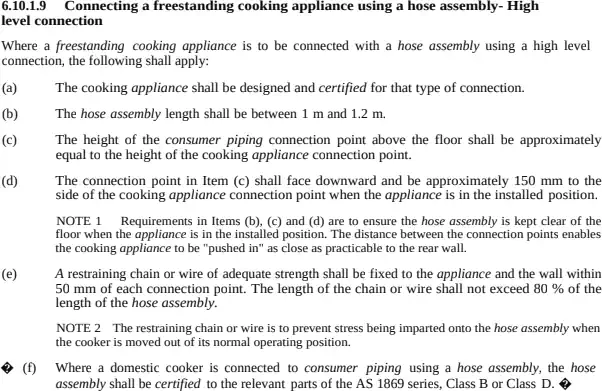
The direction of the connection alone does not necessarily tell you whether an installation is compliant. The complete appliance and hose arrangement needs to be assessed against the applicable requirements, including the requirements that applied when the installation was carried out.
What Is a Downward-Facing Gas Hose Connection? #
A freestanding gas cooker or oven may be connected to the gas supply using an approved flexible hose assembly.
A downward-facing connection is where the hose connection is positioned so that the hose initially travels downwards from the appliance or connection point.
The important issue is not simply whether the hose points down.
The gasfitter needs to assess the complete connection, including:
- The type of hose
- The connection points
- Hose routing
- Hose length
- Appliance position
- Clearance from heat
- Potential movement of the appliance
- Protection from damage
- Manufacturer installation requirements
- Applicable gas installation requirements
Is a Downward-Facing Gas Hose Automatically Non-Compliant? #
Not necessarily.
The direction of a gas hose should not be used on its own to determine whether a gas appliance installation is compliant.
The acceptability of the arrangement depends on the particular appliance, hose assembly, installation and applicable requirements.
For an existing installation, the gasfitter should also consider the requirements that applied when the installation was carried out.
Energy Safe Victoria explains that, when undertaking a gas safety check, the applicable requirements are generally those published at the time the installation occurred. Energy Safe Victoria – Gas safety checklist
This is particularly relevant when assessing older rental properties.
Why Does Hose Position Matter? #
A flexible gas hose needs to remain in a safe condition while the appliance is being used and when the appliance is moved for normal access, cleaning or servicing.
An incorrectly positioned hose may potentially be:
- Kinked
- Twisted
- Stretched
- Compressed
- Damaged by the appliance
- Exposed to excessive heat
- Caught behind the appliance
- Placed under excessive tension
Any of these conditions can affect the integrity of the gas connection.
What Should a Gasfitter Check? #
When inspecting a freestanding gas oven, the gasfitter can assess the hose connection and the surrounding installation.
1. Hose condition #
The hose should be checked for visible damage, deterioration or other defects.
2. Hose routing #
The hose should be appropriately routed and should not be unnecessarily kinked, twisted or compressed.
3. Heat exposure #
The hose and connection should be assessed in relation to heat produced by the appliance.
4. Appliance movement #
A freestanding oven may need to be moved for cleaning, maintenance or servicing.
The gas connection should be assessed to ensure normal movement does not place inappropriate stress on the hose or connection.
5. Connection points #
The connection between the appliance, hose and gas supply should be assessed for appropriate installation and condition.
6. Gas leakage #
The gasfitter should check the installation for gas leaks as part of the relevant gas safety inspection.
7. Manufacturer requirements #
The appliance manufacturer’s installation instructions can be relevant when assessing the installation.
8. Applicable gas installation requirements #
The gasfitter can determine which requirements apply based on the nature and age of the installation.
What About AS/NZS 5601.1? #
AS/NZS 5601.1 is an important Australian Standard for gas installations.
Requirements relating to gas appliance connections, flexible hose assemblies and appliance positioning have changed over different editions of the Standard.
This means that an existing freestanding oven should not automatically be assessed against today’s requirements without considering when the installation was completed.
Energy Safe Victoria’s guidance confirms that the requirements applicable during a gas safety check generally relate to those in force when the installation was undertaken.
A licensed gasfitter can assess the installation against the appropriate requirements.
Can You Move a Freestanding Gas Oven Yourself? #
You should not disconnect or alter a gas connection yourself.
Even moving an oven for cleaning can affect the position of the flexible gas hose.
If an appliance needs to be disconnected, moved, reconnected or modified, arrange for the work to be completed by an appropriately qualified gasfitter.
This is especially important if the hose is already tight, twisted or under tension.
What If the Hose Looks Too Tight? #
A hose that appears stretched, kinked or under tension should be professionally assessed.
Do not pull the oven forward or push it backwards in an attempt to correct the hose position.
Moving the appliance could increase stress on the connection.
A gasfitter can assess the hose and determine whether the installation needs adjustment, repair or replacement.
What If the Gas Hose Is Damaged? #
A damaged or deteriorated gas hose should not be ignored.
Do not attempt to repair a gas hose with tape, clamps or other temporary materials.
Gasfitting work should be carried out by an appropriately licensed or registered professional.
If you suspect a gas leak, treat the situation seriously and arrange appropriate professional assistance.
Gas Hose Connections in Victorian Rental Properties #
Victorian rental providers have responsibilities to ensure gas appliances and installations are properly maintained.
Consumer Affairs Victoria requires applicable rental properties to undergo gas safety checks every two years, with the inspection completed by a licensed or registered gasfitter with the appropriate Type A Gas Appliances Servicing endorsement. Consumer Affairs Victoria – Rental provider gas and electrical safety
The gas safety check includes checking gas appliances, fixtures and fittings for correct installation and gas leaks, as well as other safety requirements.
A gasfitter can therefore assess the gas hose connection as part of the broader gas installation.
How Often Does a Victorian Rental Need a Gas Safety Check? #
For applicable Victorian rental agreements, gas safety checks are required every two years.
From 13 October 2026, the two-year gas and electrical safety-check requirements will apply to all Victorian rental agreements, including agreements that commenced before the previous requirements took effect. Consumer Affairs Victoria – New rental law changes
Landlords and property managers should keep records of completed inspections and any remedial work.
What Should Landlords Do If They Notice a Downward-Facing Gas Hose? #
If you notice a freestanding gas oven with a downward-facing gas hose connection, don’t assume that it is automatically unsafe or automatically compliant.
Instead:
- Don’t disconnect or reposition the appliance yourself.
- Check whether the hose appears damaged, kinked, twisted or under tension.
- Arrange an inspection by an appropriately qualified gasfitter if you’re concerned.
- Have the complete connection assessed.
- Ask the gasfitter which requirements apply to the existing installation.
- Keep the inspection documentation with your rental property records.
A professional assessment is the appropriate way to determine whether the installation needs corrective work.
Need a Gas Safety Check for Your Rental Property? #
A gas hose connection is only one part of a freestanding gas oven installation.
At Rental Safety Inspections, we provide professional gas safety inspections for Victorian rental properties, helping landlords and property managers identify potential gas safety issues and maintain appropriate inspection records.
If you’re unsure about a freestanding oven’s gas hose connection or your rental property is due for a gas safety check, contact Rental Safety Inspections to arrange an inspection.
Keep your rental property’s gas installation safe, maintained and ready for your tenants.


