
Electrical wiring is designed to keep electricity safely contained within the conductors. Over time, however, insulation can deteriorate due to age, heat, moisture, rodent damage or accidental mechanical damage.
An insulation resistance test is one of the most important electrical safety tests because it helps identify hidden wiring defects before they become a serious safety risk.
What Is Insulation Resistance? #
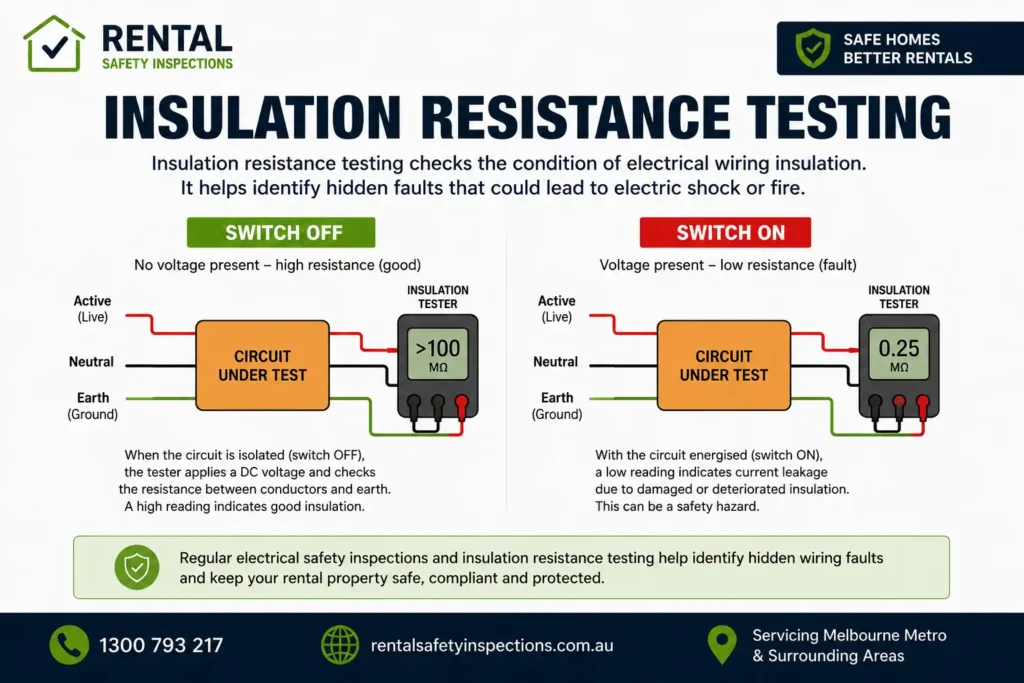
Electrical cables are covered by insulating material that prevents electricity from escaping the conductor.
When this insulation begins to break down, electrical current can leak to other conductors or to earth. This increases the risk of:
- Electric shock
- Electrical fires
- Damage to appliances
- Nuisance tripping of safety switches (RCDs)
- Electrical faults that may not be immediately visible
An insulation resistance test measures how effectively the cable insulation prevents electrical leakage. The higher the resistance, the better the condition of the insulation.
Why Is Insulation Resistance Testing Important? #
Most wiring defects are hidden behind walls, ceilings and floors, making them impossible to detect through a visual inspection alone.
Insulation resistance testing can help identify problems caused by:
- Ageing electrical wiring
- Damaged cable insulation
- Rodent or pest damage
- Moisture entering electrical wiring
- Poor previous electrical work
- Deteriorated cable joints
- Heat damage from overloaded circuits
Detecting these issues early can help prevent costly repairs and reduce the risk of electrical hazards.
Australian Wiring Rules #
Electrical installations in Australia are verified in accordance with AS/NZS 3000 (Australian/New Zealand Wiring Rules).
The Wiring Rules specify that the insulation resistance between consumer mains, submains, live conductors and earthed parts of an installation must generally be not less than 1 megaohm (1 MΩ). In practice, modern installations and shorter cable runs are typically expected to achieve significantly higher readings.
Common Causes of Low Insulation Resistance #
During electrical safety inspections, electricians may identify insulation resistance issues caused by:
- Older deteriorated wiring
- Rodent damage inside roof spaces
- Water ingress
- Damaged flexible cables
- Poor electrical repairs
- Heat-damaged insulation
- Cable damage during renovations
These faults are often hidden from view and may only be detected through electrical testing.
Why It Matters for Victorian Rental Properties #
Victorian rental properties are required to undergo prescribed electrical safety checks at the required intervals, and electrical installations must be maintained in a safe condition.
Although insulation resistance testing is only performed where appropriate and safe to do so, it can provide valuable information about the condition of the property’s electrical wiring and help identify hidden defects that may require further investigation or repair.
Any repairs or modifications to an electrical installation should always be carried out by a licensed electrician.
Book an Electrical Safety Inspection #
Rental Safety Inspections provides professional electrical safety inspections throughout Melbourne and surrounding areas.
Our licensed electricians inspect switchboards, safety switches (RCDs), wiring and other electrical components as part of Victoria’s prescribed rental electrical safety inspections. We help identify electrical defects that may require attention and support compliance with applicable electrical safety requirements.
Contact Rental Safety Inspections today to book your electrical safety inspection.
Understanding Insulation Resistance Testing #
Electrical wiring is designed to keep electricity safely contained within the conductors. Over time, however, insulation can deteriorate due to age, heat, moisture, rodent damage or accidental mechanical damage.
An insulation resistance test is one of the most important electrical safety tests because it helps identify hidden wiring defects before they become a serious safety risk.
What Is Insulation Resistance? #
Electrical cables are covered by insulating material that prevents electricity from escaping the conductor.
When this insulation begins to break down, electrical current can leak to other conductors or to earth. This increases the risk of:
- Electric shock
- Electrical fires
- Damage to appliances
- Nuisance tripping of safety switches (RCDs)
- Electrical faults that may not be immediately visible
An insulation resistance test measures how effectively the cable insulation prevents electrical leakage. The higher the resistance, the better the condition of the insulation.
Why Is Insulation Resistance Testing Important? #
Most wiring defects are hidden behind walls, ceilings and floors, making them impossible to detect through a visual inspection alone.
Insulation resistance testing can help identify problems caused by:
- Ageing electrical wiring
- Damaged cable insulation
- Rodent or pest damage
- Moisture entering electrical wiring
- Poor previous electrical work
- Deteriorated cable joints
- Heat damage from overloaded circuits
Detecting these issues early can help prevent costly repairs and reduce the risk of electrical hazards.
Australian Wiring Rules #
Electrical installations in Australia are verified in accordance with AS/NZS 3000 (Australian/New Zealand Wiring Rules).
The Wiring Rules specify that the insulation resistance between consumer mains, submains, live conductors and earthed parts of an installation must generally be not less than 1 megaohm (1 MΩ). In practice, modern installations and shorter cable runs are typically expected to achieve significantly higher readings.
Common Causes of Low Insulation Resistance #
During electrical safety inspections, electricians may identify insulation resistance issues caused by:
- Older deteriorated wiring
- Rodent damage inside roof spaces
- Water ingress
- Damaged flexible cables
- Poor electrical repairs
- Heat-damaged insulation
- Cable damage during renovations
These faults are often hidden from view and may only be detected through electrical testing.
Why It Matters for Victorian Rental Properties #
Victorian rental properties are required to undergo prescribed electrical safety checks at the required intervals, and electrical installations must be maintained in a safe condition.
Although insulation resistance testing is only performed where appropriate and safe to do so, it can provide valuable information about the condition of the property’s electrical wiring and help identify hidden defects that may require further investigation or repair.
Any repairs or modifications to an electrical installation should always be carried out by a licensed electrician.
Book an Electrical Safety Inspection #
Rental Safety Inspections provides professional electrical safety inspections throughout Melbourne and surrounding areas.
Our licensed electricians inspect switchboards, safety switches (RCDs), wiring and other electrical components as part of Victoria’s prescribed rental electrical safety inspections. We help identify electrical defects that may require attention and support compliance with applicable electrical safety requirements.
Contact Rental Safety Inspections today to book your electrical safety inspection.


