

- Can a Gas Pipe Be Clipped to a Fence?
- Why Can Fence-Mounted Gas Pipework Be a Concern?
- What Does AS/NZS 5601.1 Say?
- What Should a Gasfitter Check?
- What If the Fence Is Being Replaced?
- What If the Gas Pipe Looks Unsafe?
- Gas Pipework and Victorian Rental Properties
- How Often Does a Victorian Rental Need a Gas Safety Check?
- What Should Landlords Do About a Gas Pipe Attached to a Fence?
- Need a Gas Safety Check for Your Rental Property?
Gas consumer pipework can sometimes be seen running along fences at residential properties. While this may look like a simple way to support a gas pipe, gas pipework attached to a fence can raise important safety and compliance questions.
For Victorian landlords and property managers, it is important to understand that the requirements for gas installations can depend on the type of installation, the work carried out and the requirements that applied when the installation was completed.
If you notice gas pipework clipped or attached to a fence, it should be assessed by an appropriately qualified gasfitter rather than assumed to be compliant or non-compliant from appearance alone.
Can a Gas Pipe Be Clipped to a Fence? #
The installation of consumer gas pipework on or near a fence is subject to requirements under the applicable gas installation standard.
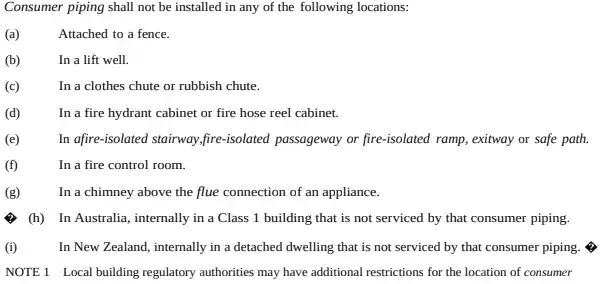
Australian Standard AS/NZS 5601.1 contains requirements relating to the installation and support of consumer piping, including restrictions concerning attachment to fences.
However, when assessing an existing installation, it is important to consider which requirements applied at the time the gas installation was carried out.
Energy Safe Victoria advises that, for a gas safety check, the applicable requirements are generally those that were published at the time the installation was undertaken. Energy Safe Victoria – Gas safety checklist
For this reason, simply seeing a gas pipe attached to a fence does not provide enough information to determine whether an older installation complies with the requirements applicable to it.
Why Can Fence-Mounted Gas Pipework Be a Concern? #
A fence is not necessarily a permanent or stable structure.
Fences can:
- Move over time
- Rot or deteriorate
- Be damaged
- Be replaced
- Be removed
- Shift because of ground movement
- Be affected by landscaping or construction work
If gas pipework is supported by a structure that moves or deteriorates, the pipework may be exposed to unwanted movement or mechanical stress.
Gas pipework also needs to be protected from damage and installed in a way that maintains the integrity of the gas installation.
What Does AS/NZS 5601.1 Say? #
AS/NZS 5601.1 is one of the key Australian Standards used for gas installations.
The requirements concerning consumer piping and fences have changed over different editions of the Standard.
This is important for rental properties because an existing gas installation should not automatically be assessed as though it were installed under the latest edition of the Standard.
Energy Safe Victoria explains that the applicable requirements during a gas safety check generally relate to the requirements in force when the installation was undertaken.
A qualified gasfitter can therefore assess the installation and determine which requirements apply.
What Should a Gasfitter Check? #
When gas pipework is attached to or supported by a fence, a gasfitter can assess the installation as part of the property’s gas safety inspection.
The assessment may consider:
The condition of the pipework #
The gasfitter can look for corrosion, deterioration, damage or other visible problems.
How the pipe is supported #
The pipework should be appropriately supported for the installation and protected from unnecessary movement or mechanical damage.
The condition of the fence #
If the fence is damaged, unstable or deteriorating, this may affect the installation where pipework relies on it for support.
Exposure to physical damage #
Gas pipework should be protected from foreseeable damage caused by vehicles, gardening activities, building work or other activities around the property.
Pipework location #
The gasfitter can assess the position of the pipework in relation to buildings, structures, other services and potential sources of damage.
Gas leakage #
Gas safety checks include checking the gas installation for leaks.
Applicable requirements #
The gasfitter can consider the requirements applicable to the installation, including the relevant edition of the gas installation standard.
What If the Fence Is Being Replaced? #
This is particularly important for landlords and property managers.
If a fence supporting or carrying gas pipework is going to be replaced, do not simply remove the fence or disconnect the pipework yourself.
The gas installation should be assessed before work begins.
A qualified professional can determine whether the pipe needs to be:
- Re-supported
- Re-routed
- Protected
- Repaired
- Replaced
- Otherwise modified
Gasfitting work should only be performed by an appropriately licensed or registered professional.
What If the Gas Pipe Looks Unsafe? #
If you notice gas pipework that appears loose, damaged, corroded or poorly supported, arrange for it to be assessed by an appropriately qualified gasfitter.
Warning signs can include:
- Visible corrosion
- Damaged pipework
- Loose clips or supports
- A damaged or unstable fence
- Pipework that appears to be under stress
- Evidence of impact
- Recent fence replacement or construction work
- A suspected gas leak
Do not attempt to move, cut, disconnect or re-secure gas pipework yourself.
Gas Pipework and Victorian Rental Properties #
Victorian rental providers have obligations relating to the safety and maintenance of gas installations.
Consumer Affairs Victoria requires applicable rental properties to have regular gas safety checks performed by a licensed or registered gasfitter with the appropriate Type A Gas Appliances Servicing endorsement. Consumer Affairs Victoria – Rental provider gas and electrical safety
A gas safety check includes checking gas appliances, fixtures and fittings for correct installation and gas leaks, together with other safety requirements.
For existing installations, the gasfitter must consider the requirements applicable to that installation rather than automatically treating every older installation as though it were newly installed today.
How Often Does a Victorian Rental Need a Gas Safety Check? #
For applicable Victorian rental agreements, gas safety checks are required every two years.
From 13 October 2026, the two-year gas and electrical safety-check requirements will apply to all Victorian rental agreements, including agreements that commenced before the previous requirements took effect. Consumer Affairs Victoria – New rental law changes
Landlords and property managers should keep records of completed safety checks and any required remedial work.
What Should Landlords Do About a Gas Pipe Attached to a Fence? #
If you find consumer gas pipework clipped or attached to a fence:
- Don’t disconnect or move the pipework yourself.
- Arrange an inspection by an appropriately qualified gasfitter.
- Tell the gasfitter if the fence is being repaired or replaced.
- Have the condition and support of the gas pipe assessed.
- Ask which requirements apply to the existing installation.
- Keep records of the inspection and any work completed.
The fact that a gas pipe is attached to a fence does not, by itself, provide enough information to determine the compliance status of an existing installation.
A professional assessment is the safest way to determine whether action is required.
Need a Gas Safety Check for Your Rental Property? #
Gas pipework is only one part of a property’s overall gas installation.
At Rental Safety Inspections, we provide professional gas safety inspections for Victorian rental properties, helping landlords and property managers identify potential gas safety issues and maintain appropriate inspection records.
If you’re concerned about gas pipework attached to a fence, an older gas installation or any other gas safety issue, arrange a professional inspection.
Contact Rental Safety Inspections to arrange your Victorian rental gas safety check.


